
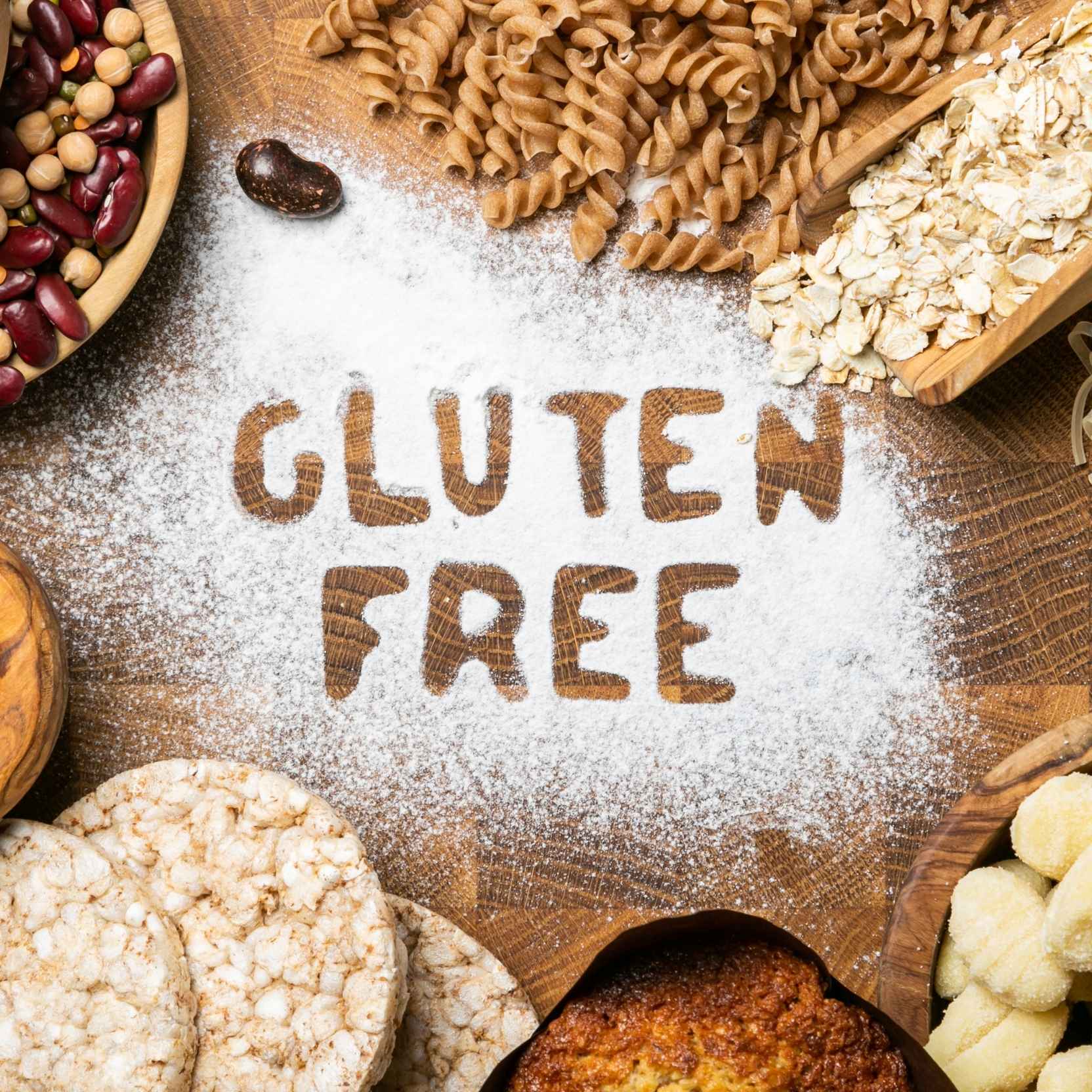
What the Science Reveals - and What My Own Kitchen Has Taught Me
There was a time when gluten wasn’t a question for me.
It was wrapped up in wheat, our cultural staple, familiar and convenient. Besides, growing up in the 70’s that’s what we had for our lunches – a “Tip Top” sandwich with vegemite and lettuce. Anyone resonate?
But as my own health journey deepened (early adulthood) – and as I began working more closely with people navigating autoimmune thyroid conditions (as a Naturopath) – I realised that gluten, like many foods, is a problem. However, I also learned this ‘problem’ was worse for some than others. It isn’t inherently problematic… yet it isn’t always neutral either.
For some bodies, it blends quietly into the background.
For others, it behaves more like static – subtle interference in an already busy immune system.
This article isn’t about fear or food rules.
It’s about immune signalling, gut integrity, and learning to listen – both through science and lived experience.
My Gluten-Free Journey: From Experimentation to Intention
When I first explored gluten-free living, it wasn’t polished.
It was practical. Store bought GF bread that typically replaced my ‘wheat’ rhythm.
My journey developed, and I started by creating my own gluten-free flour blends, working with baker’s yeast, experimenting with textures, fermentation times, and digestion. It was messy, imperfect, and deeply educational.
Over time, that curiosity evolved.
I went on to master gluten-free sourdough – not as a replacement for bread-as-a-staple, but as something far more intentional.
Because let’s be honest…
you’ve got to put your egg on something.
And that’s the key distinction.
Bread became a side show, not the main event.
A supporting character – not the lead.
That shift alone changed how my body responded: less heaviness, better digestion, clearer energy, and far greater respect for how foods are prepared, not just what they are. However, this ‘change’ took about a decade, because the journey isn’t linear, and there are so many elements to consider along the way.
What I discovered was:
Fermentation matters.
Quality matters.
Context matters.
Autoimmune Thyroid Disease: A System Already Listening Closely
Autoimmune thyroid conditions such as Hashimoto’s thyroiditis and Graves’ disease occur in a system that is already highly alert.
Research consistently shows that these conditions are shaped by:
- immune system signalling
- gut barrier integrity
- inflammatory and oxidative load
- nutrient availability
- genetic and environmental context
Large clinical reviews – including the comprehensive Nutrients (2020) review by Passali et al. – highlight that while gluten-free diets are not universally required, certain subgroups show meaningful improvements in immune markers when gluten-related immune activation or gut permeability is present.
This reinforces an essential truth:
👉 It’s not about gluten being “bad.”
It’s about whether it adds friction to your system.
Over the years, I’ve leaned into the science, and more so into my body. I’ve found that once learning more about my own body, and it’s uniqueness, the decision became clear to significantly reduce/ and almost eliminate gluten from my diet.
As far as the science is concerned…
Here are 5 ways that Gluten can sabotage your Thyroid Health:
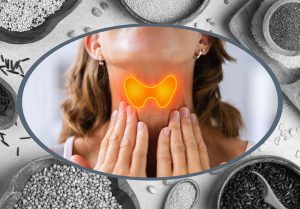
1. Gluten, the Gut, and Immune Communication
Around 70–80% of immune coordination occurs at the gut lining.
Gluten contains proteins – particularly gliadin – that are resistant to complete digestion. Research using intestinal cell models and human biopsy studies demonstrates that gliadin exposure can influence zonulin, a protein involved in regulating gut tight junctions.
When zonulin signalling increases:
- the gut barrier becomes more permeable
- immune exposure increases
- immune vigilance may intensify
Importantly, elevated zonulin levels have been observed in autoimmune thyroid conditions and have been shown to correlate with thyroid antibody levels in some studies.
This does not mean gluten causes autoimmunity.
It means that in susceptible individuals, gut–immune conversations may become louder.
Supporting gut integrity often quietens the noise.
2. Molecular Mimicry: When Signals Overlap
One of the most compelling mechanisms explored in autoimmune research is molecular mimicry.
Gliadin shares structural similarities with certain thyroid tissue proteins. In genetically predisposed individuals, immune recognition patterns may overlap – leading the immune system to remain vigilant even when the original trigger is no longer present.
This phenomenon is discussed in multiple autoimmune reviews, including recent immunological and thyroid-focused analyses (Tywanek et al., 2024).
Again – this isn’t about intolerance.
It’s about pattern recognition in a sensitive system.
Reducing immune confusion allows regulation to re-emerge.
3. Nutrient Absorption: When the Gut Finally Gets a Chance
Thyroid physiology depends on nutrients such as:
- selenium
- zinc
- iron
- iodine
- magnesium
When gut inflammation is present, absorption efficiency can drop while nutrient demand simultaneously increases.
Many people notice:
- improved energy
- clearer thinking
- better stress management
- better digestion
not because they removed gluten per se – but because their gut regained the ability to absorb nourishment properly. So again, gluten has been the sabotaging factor here.
This aligns with clinical observations across autoimmune populations, including thyroid-specific research reviewed in Int. J. Mol. Sci. (2024).
4. Inflammation Is a Load, Not a Switch
Autoimmune conditions are rarely driven by a single factor.
They reflect total inflammatory burden.
Gluten may contribute to this load in some individuals by influencing:
- cytokine signalling
- oxidative stress
- immune activation thresholds
When one persistent input is reduced, the entire system often recalibrates.
Less noise creates more capacity.
5. Cell Signalling skewed
Gluten’s impact on thyroid health goes deeper than simple irritation or inflammation. It can interfere at the level of the cell itself. Certain proteins within gluten, particularly gliadin, have a molecular structure that allows them to bind to cellular receptors and transport pathways, subtly distorting how messages are received and interpreted.
When these receptors are occupied or “confused,” the thyroid’s hormonal signals can become blurred. Even when thyroid hormones are present in adequate amounts, the message may not land clearly at the cellular level, leading to reduced responsiveness and functional sluggishness. In essence, the hormone is speaking, but the cell is not fully listening. Over time, this miscommunication can skew metabolic signalling, disrupt feedback loops along the HPT axis, and contribute to the familiar experience of persistent symptoms despite seemingly “normal” blood results.
A Whole-Food Reality Check
It’s also important to say this clearly:
Gluten-free does not automatically equal health-supportive.
Many commercial gluten-free products are highly processed, rich in fillers, gums, and refined starches – placing their own burden on metabolic and immune pathways.
That’s why my own approach – and what I teach clinically – is grounded in whole foods, fermentation, and intention.
Bread as an accompaniment.
Not a foundation.
Presence over excess.
Final Reflection
Autoimmune healing isn’t about perfection.
It’s about reducing friction so the body can remember how to regulate again.
For some, gluten is background noise.
For others, it’s a signal asking to be heard.
Functional testing, lived experience, and scientific evidence all deserve a seat at the table.
And sometimes…
changing how you relate to food is just as powerful as changing the food itself.
Key Scientific References
- Passali M. et al. Nutrients, 2020 – Review on gluten-free diets in autoimmune diseases, including autoimmune thyroid disease
- Tywanek E. et al. International Journal of Molecular Sciences, 2024 – Autoimmune thyroid disease mechanisms, immune signalling, gut–thyroid connections (Additional referenced studies within both reviews covering zonulin, gut permeability, immune activation, and thyroid antibodies )


